
Picture by Simon Dawson / No 10 Downing Street, used with permission.
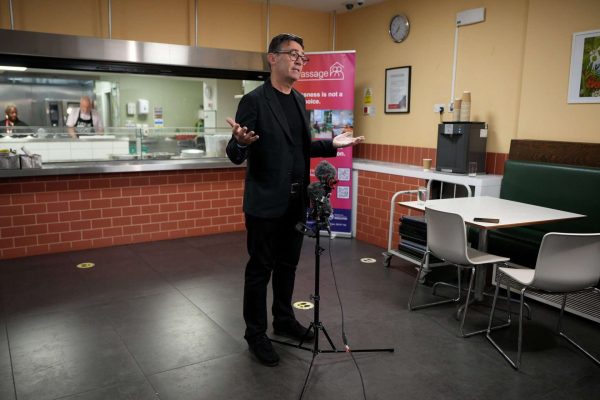
Andy Burnham’s very first act as prime minister, before he even arrived in Downing Street, was to visit The Passage, a Christian homelessness charity working with rough sleepers in Westminster.
From the off, this new prime minister has put a commitment to end homelessness front and centre of his ambitions for his time in office.
His pledge on the steps of Downing Street on his first day that ‘everyone sleeping rough should have a route off the streets by Christmas’ has prompted plenty of debate across the homelessness sector. Some have welcomed the ambition. Others have questioned whether such a goal is achievable.
Jon Kuhrt’s thoughtful article on the history of such policy aims, and the challenges behind the pledge is heartily worth a longer read.
But for many of our churches already serving people affected by homelessness, perhaps the more immediate question is: what does this mean for us?
Picture by Simon Dawson / No 10 Downing Street
Churches are already part of the solution
The announcement is about more than a Christmas target. Alongside the pledge, the government has committed a £442 million package of support, including emergency accommodation, housing and health support, and investment in more than 1,000 settled homes over the next three years.
Importantly for churches, ministers have been clear that ending rough sleeping cannot be achieved by government alone. Faith groups, charities, local authorities, health services and community organisations are all expected to play a part. The reality is that churches across London are already part of the response. There is a significance to the fact that Andy Burnham visited a faith based project connected to a church, not a council day centre.
Large Christian charities like the Passage, or The Connection at St Martins fly the flag for faith based involvement in the homelessness sector. But beyond that, within this diocese and across the country, local churches make up a huge network of support.
Every week, churches run night shelters, day centres, foodbanks, community cafés, warm spaces and outreach projects. Many also provide something less visible but equally important: trusted relationships with people who may be experiencing poverty, isolation, poor mental health, trauma or housing insecurity.



Not just short term accomodation but long term fixes
What we are hearing from government is that tackling rough sleeping cannot be achieved through emergency accommodation alone.
The emphasis is increasingly on prevention, partnership, and long-term recovery. It is about helping people into stable housing, supportive relationships and lasting wellbeing. That means the role of local churches becomes even more significant.
Churches across London provide such a wide variety of services and are often among the first places to notice when someone is struggling. They know their communities, they build trust over time, and they are uniquely placed to offer the kind of welcome, friendship and belonging that supports recovery alongside statutory services.
We should be realistic about the challenges. Many organisations are already stretched, and those who served on the frontline during COVID will remember the personal cost of responding to a crisis. Yet the message coming from government is clear: this work will only succeed through local partnerships, shared responsibility and communities willing to play their part.
Local community funding
Perhaps one of the most encouraging aspects of the announcement is the recognition it gives to the role of local communities. The “Ending Homelessness in Communities Fund” has invested £47 million in voluntary, community and faith organisations working to prevent homelessness, strengthen day services and support long-term recovery.
Several London organisations, including church and community-led projects such as C4WS Homeless Project in Camden and This is GrowTH Ltd in Tower Hamlets, have received funding (you can find a full list organisations awarded funding here).
Of course, most churches will not receive government funding directly. Yet the significance of this announcement reaches beyond the organisations awarded grants. It reflects a growing recognition that lasting change happens through local networks of support, where churches, charities, councils and community groups each play their part.

Homelessness is about more than a lack of housing
If this pledge is to lead to lasting change, the wraparound support people need will matter just as much as a roof over their head.
Supportive relationships, community and a sense of belonging are just as important as accommodation itself. These are gifts that many churches already offer through their presence, pastoral support and long-term commitment to their communities.
The government’s announcement represents one of the most significant recent investments in community-based responses to homelessness. Funding alone will not end rough sleeping, but it signals a growing recognition that lasting change depends on strong local partnerships and trusted community organisations.
And Churches are not on the sidelines of this conversation; they are already part of the solution. They may vary in size, resources and capacity, but they remain uniquely placed to bring the gifts that churches offer so well: compassion, consistency and community. That is why churches, in all their different capacities, remain essential partners in the journey ahead.
Want to think more about churches response to homelessness?
You can find more information and resources on the “Homelessness and Housing” section of our Compassionate Community website.
If you would like more resources, or to for a conversation please get in touch!