
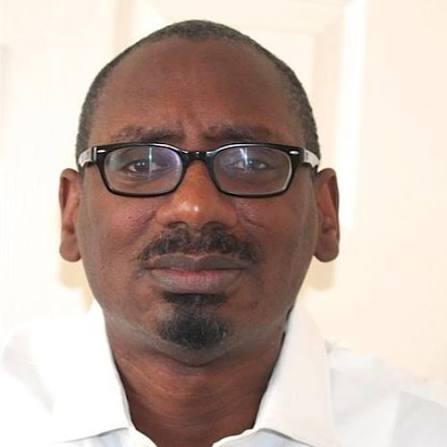
In ‘God’s People on the Move’, Dr Richard Reddie, Director of Justice and Inclusion for Churches Together in Britain and Ireland, explores what the Bible has to say about the movement of people, and what it can teach us today regarding immigration and asylum.

Genesis 12:1–2

The Lord had said to Abram, “Go from your country, your people and your father’s household to the land I will show you. I will make you into a great nation, and I will bless you…”

Matthew 2:13–14

When they had gone, an angel of the Lord appeared to Joseph in a dream. “Get up,” he said, “take the child and his mother and escape to Egypt. Stay there until I tell you, for Herod is going to search for the child to kill him.” So he got up, took the child and his mother during the night and left for Egypt.

Lessons from the Bible

The Scriptures are replete with stories of men, women and children moving from one place to another for a variety of reasons. In the case of Abram (Abraham), God called him and his family to embark on a journey that would lead to the establishment of a new nation. In the Holy Family’s scenario, it was to flee the murderous attention of Herod.

Modern day lessons

Christians recently had an opportunity to celebrate the anniversary of the arrival of Empire Windrush, and mark Refugee Week. What was more, Sunday 21 June were both Windrush Sunday and Sanctuary Sunday. Windrush Sunday acknowledged the humungous ongoing contributions of the Windrush Generation to Britain, especially the Church, whose fortunes have been revived by the Black Christians. Sanctuary Sunday asked us to pray for those who seek refuge in this country. The commonalities between these Special Sundays are that they involve men and women, made in the image of God, leaving their homes and homelands to start a new life elsewhere.

Learning from the Bible

While the Bible has much to say about movement or travel, it has even more to say about how we should treat those who make these journeys.

Leviticus 19:34

You shall treat the stranger who sojourns with you as the native among you, and you shall love him as yourself, for you were strangers in the land of Egypt: I am the Lord your God.

Matthew 25:35

For I was hungry and you gave me food, I was thirsty, and you gave me drink, I was a stranger, and you welcomed me.

Learning from the lessons of the past

While we largely celebrate the contribution of the Windrush Generation, their presence was never universally celebrated in the British Church or society. There was rampant racism at a time when there was no legislation to outlaw its worst excesses. Sadly, there was also racism in the Church – Black brothers and sisters in Christ were treated like unwanted strangers in far too many places of worship.

Is there the danger that we are repeating these mistakes in the way we, as a society, treat asylum seekers and refugees? Are we showing them hostility rather than hospitality?

What is the Bible saying to us about this?

It is hard to not to come to the conclusion that God calls on his people to show compassion, mercy and hospitality to ‘aliens’ and strangers, who in our context, would be those seeking sanctuary, such as refugees. God commands us to do this because he loves all those who are made in his image (Genesis 1:27).

The question we need to ask ourselves is, how can we show the love of God, in practical ways, to those who are escaping danger and seeking sanctuary in this country?

There is an ever-growing hostility to asylum seekers and refugees on these shores that arguably runs contrary to the teachings found in the Bible. How can we help to change this narrative and discourse?

Prayer

Lord Jesus, you knew what it was like to be a refugee when you fled to Egypt for sanctuary. As your people, may we be ever supportive of those who are forced to leave their homes and homelands due to war, persecution, the climate emergency or poverty. Let us be those who show your love to those who need it most.


Stay Connected with the Racial Justice Priority

If you would like to stay connected with the work of the Racial Justice Priority in the Diocese of London, we warmly invite you to subscribe to the Racial Justice Bulletin. Each edition includes stories, reflections, prayers, practical resources and updates from across the Diocese, helping to support and encourage our collective journey towards racial justice.

All News