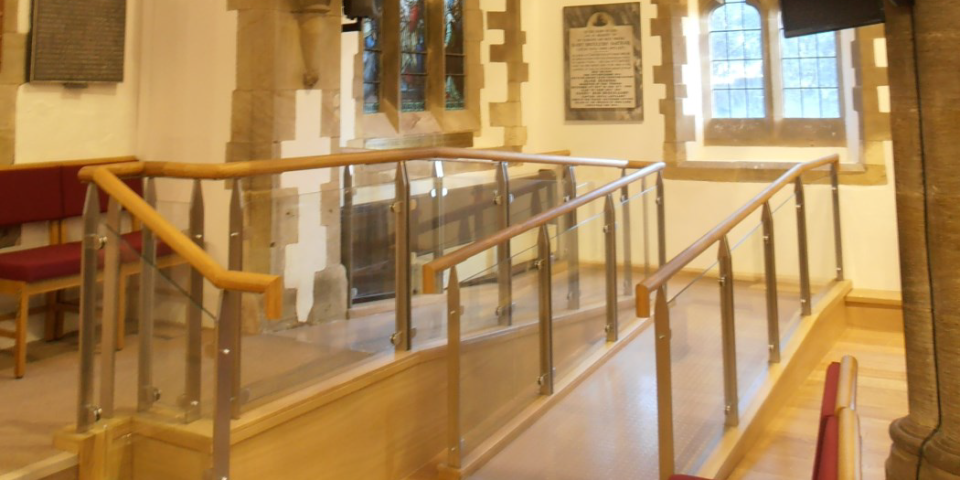
The Church of England has launched its Parish Accessibility Fund, with £800,000 available in small grants of up to £5,000 to help parishes make practical improvements. It is an opportunity for churches to identify and remove barriers that can prevent people taking part fully in church life – whether those barriers are physical, sensory, related to communication, or simply about how people experience a building or service.
St George’s, Tufnell Park
At St George’s Tufnell Park, funding has helped with a range of practical changes, including sturdy chairs, a portable ramp, sensory equipment, fiddle toys and clearer signage. The church is also improving its website and looking at better ways to help people with sight impairments find their way around. It is a good example of how accessibility is about more than getting through the door – it is about helping people feel comfortable and able to take part.
Church at Five, Edmonton
Church@five seeks to make its services accessible and welcoming to everyone. The Green Man Community Centre provides step-free access, an accessible toilet, parking outside, and space for wheelchairs and mobility scooters in the service. Services follow a familiar pattern each week, helping people know what to expect and making it easier to participate with confidence. Activity sheets are available for anyone who finds these helpful for concentration. People are free to move around, take breaks, use ear defenders or bring other aids that help them participate. Breeze Translate is also being trialled to support those for whom English is not their first language, and the team is available to discuss any additional access needs.
St Paul’s Parish, Brentford
At St Paul’s Parish in Brentford, accessibility is about giving people choices. Sofas and tables at the sides and back of the church provide alternatives to conventional seating, while quiet zones at events give people somewhere to go if the noise or crowds become overwhelming. The church has also made an accessibility video so visitors know what to expect, is exploring technology to help people follow services in their first language, and livestreams its main Sunday service for those unable to attend.
Church of the Ascension, Ribbleton, Preston
At the Church of the Ascension in Ribbleton, accessibility is at the heart of the Preston Deaf Church. Services are led in British Sign Language, alongside spoken English, with a hearing loop and projected liturgy, hymns and readings. The building is fully step-free, with accessible parking and ramped entrances. The church also provides spaces and activities for children with additional needs, including sensory play and quieter areas for those who can become overwhelmed.
All Hallows, Bispham, Blackpool
A £3,100 grant helped All Hallows improve its disabled parking bay and create a space for wheelchair users at the centre of the church. Previously, Roy Sibley, a wheelchair user, had to sit at the back on his own because there was nowhere else suitable. Now, he says: “I feel part of the service and part of the church family.” The Rev Jonny Lee, Rector of All Hallows, says the project shows how “a small change can make a big difference.”
Why accessibility matters
Making your church more accessible is about more than removing physical barriers. It is about creating a culture where people can participate, contribute and belong. Often, the changes are simple – clearer signs, better communication, flexible seating, quieter spaces or a more thoughtful welcome – but they can make a real difference to disabled people, older people, families and the wider congregation.
It is also an opportunity for parishes to be leaders in their communities, setting the kind of culture they want to see. An accessible church can build stronger relationships with local organisations and authorities, and demonstrate that the church’s welcome is something people can experience in practice. Most importantly, it sends a simple message: you belong here, and we want you to be here.
Applying for a grant
The Parish Accessibility Fund is designed to make it relatively straightforward for parishes to identify a barrier and do something about it. Before applying, think about what you want to change, who it will help, what you want to do and how much it will cost.
You will need some basic information about your church and your proposed project, including the accessibility need, the improvements you want to make, who will benefit and the likely costs. If you are buying equipment or commissioning work, it is worth getting quotes or estimates early.
If you are not sure where to start, an accessibility audit can be a useful first step. It can highlight issues you may not have considered, from entrances and toilets to seating, signage, lighting, acoustics and how information is presented. You do not need to fix everything at once. The aim is to identify the changes that could make the biggest difference.
The Diocese is also there to help. If you are unsure whether your idea is suitable for the fund, need help developing it or would like advice on carrying out an accessibility audit, speak to Disability Ministry Enabler, John Beauchamp. The aim is not just to help parishes secure a grant, but to help them build accessibility into the way they welcome and serve their communities.
Visit the Church of England website for more information about these grants.