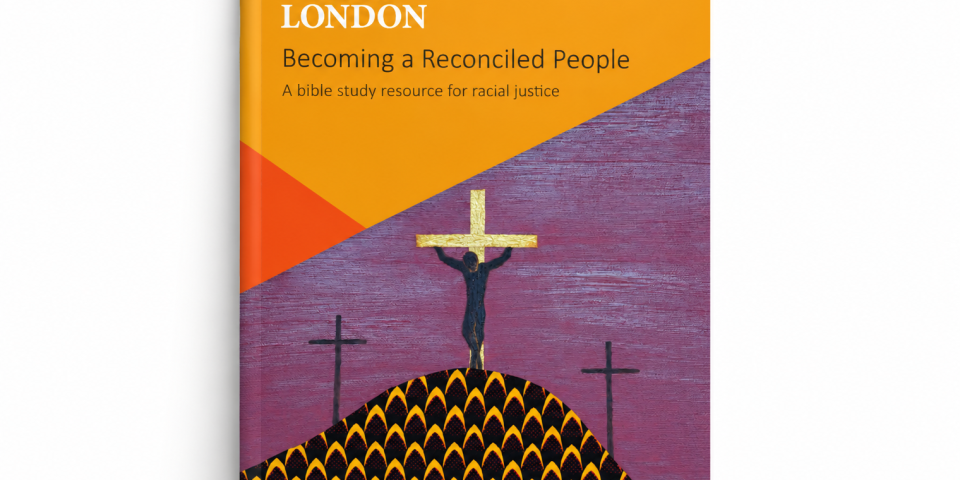
The Diocese of London’s Racial Justice Priority Team has launched a new Bible study resource, Becoming a Reconciled People, inviting churches and individuals to explore how Scripture can inform the Church’s response to racial injustice and its commitment to reconciliation.
The resource brings together nine Bible studies exploring how Christians can help build communities where everyone is valued, heard and able to belong and flourish.
Written by contributors from across the Diocese, the studies explore themes including identity, hospitality, exclusion, justice, belonging and reconciliation. Each includes a Bible passage, reflection and discussion questions, helping individuals and church groups connect their faith with the way they live and serve alongside others.
What does reconciliation look like in practice?
The Bible study resource opens with the vision in Revelation 7:9–10 of a great multitude drawn from every nation, tribe, people and language, gathered in worship before God. This vision of unity across difference runs throughout the studies, inviting readers to consider how churches can celebrate the richness of human diversity while addressing the barriers that prevent people from participating fully in church life.
The studies encourage honest reflection on the ways exclusion can take root in attitudes, practices and structures. They challenge Christians to look beyond good intentions and consider what genuine reconciliation requires, both in personal relationships and in the life of the Church.
The Rt Revd Dr Anderson Jeremiah, Bishop of Edmonton and Lead Bishop for Racial Justice, said:
Racial justice is not an optional concern for Christians. It is rooted in the character of God and in the reconciling work of Jesus Christ. Scripture calls us not simply to speak of unity, but to examine the barriers that prevent people from belonging and flourishing.
These studies invite us to listen carefully to God’s word and to one another, and to allow that encounter to change us. Reconciliation is not achieved through good intentions or a single conversation. It requires truthfulness, repentance and action. My hope is that this resource will help our churches become communities where every person’s dignity is honoured, every voice can be heard and the reconciling love of Christ is made visible in how we live together.
A resource for churches and congregations
The pilgrimage and the new resource invite churches to consider how the lessons of history and the teaching of Scripture can inform the pursuit of racial justice today. Together, they offer opportunities to listen, learn and reflect on the responsibilities involved in building communities where people of every background can flourish.
The resource is designed for individuals, parish groups and congregations. It encourages participants to approach conversations about race, exclusion and belonging with honesty, care and compassion, recognising that listening and learning from one another are essential to the work of reconciliation.
Becoming a Reconciled People concludes with a reminder that reconciliation is not achieved through one conversation or one Bible study. It is an ongoing journey of listening, learning, repentance, prayer and action, allowing Scripture to shape not only what Christians believe, but how they worship, lead, serve and live alongside one another.
Exploring the history of racial justice in East London
The resource was launched alongside this year’s Black History Month pilgrimage, organised by the Diocese’s Racial Justice Priority Team. Held on Friday 23 October, the walk took participants through East London, exploring the histories of migration, community and resistance that have helped shape the area.

Led by the Rt Revd Dr Anderson Jeremiah, Bishop of Edmonton and Lead Bishop for Racial Justice, alongside historian Dr Robin Whitburn, the pilgrimage followed a route from Limehouse Station to Cable Street. Stops included Limehouse Basin, the Royal Foundation of St Katharine, the Thames foreshore and St George-in-the-East.


The walk explored themes including escape and repression in the 18th century, baptism and resistance, and unity in resistance during the 20th century. Prayer, reflection and short liturgical moments throughout the pilgrimage offered opportunities to connect these histories with questions of justice and belonging today.


Read or download Becoming a Reconciled People: A Bible Study Resource for Racial Justice and explore further racial justice resources.
More from Black History Month
Continue exploring questions of racial justice, faith and reconciliation through our other Black History Month reflections:
- The Truth That Makes Hope Possible, in which the Rt Revd Lusa Nsenga-Ngoy, Bishop of Willesden, reflects on a racial justice pilgrimage to Montgomery and Selma, Alabama, exploring truthful remembrance, the power of listening and the Church’s responsibility to help build a more just future.
- The Fruit of Justice, in which the Rt Revd Dr Anderson Jeremiah, Bishop of Edmonton, shares his sermon preached at St John’s Episcopal Church in Montgomery, Alabama. Reflecting on racial injustice, repentance, privilege and Christian responsibility, he challenges the Church to pursue justice and bear the fruits of mercy, truth and peace in its life and witness.