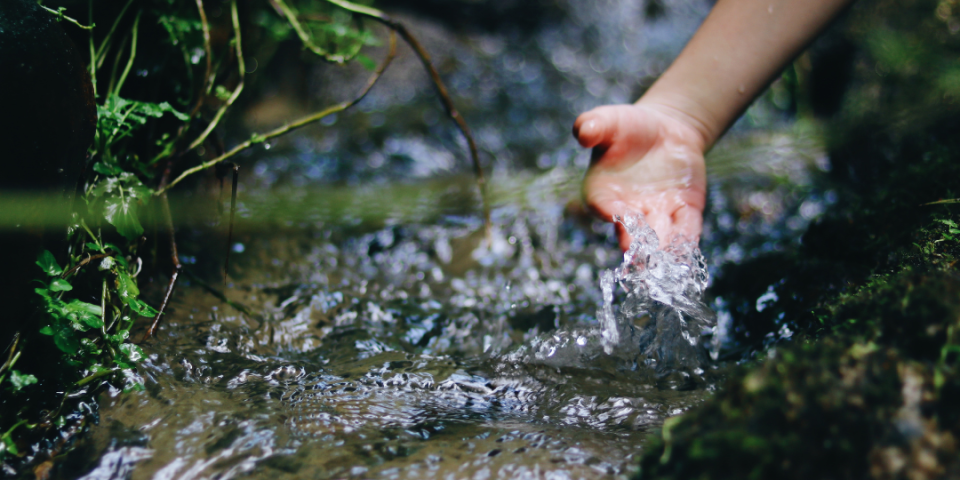
Creationtide runs from 1 September to 4 October 2026, the Feast Day of St Francis. It is an ecumenical period to pray and act for the care of our Common Home. The theme “Living Water” during Creationtide reminds us that God did not create the world and walk away. He continues to sustain everything with life, movement, and grace.
Three points to meditate on together
- Water that purifies: Water washes, cleans, and renews. In the beginning, the Spirit of God hovered over the waters. And Jesus said: “Whoever believes in me, rivers of living water will flow from within them.”
Reflection: What areas of my life, our community and the Earth need to be ‘washed’ today? Pollution, injustice, weary souls: God wants to make new water flow there.
- Water that gives life: Without water, there is no creation: plants, animals, ourselves. In Mozambique, we feel this deeply during the dry season and the floods. Water reminds us that everything depends on Him.
Reflection: Are we taking care of our water sources: rivers, seas and wells? Caring for water is caring for the gift God has given us in creation.
- Water that flows and never stops: Stagnant water becomes foul. Living water flows, irrigates, transforms. God calls us to be like it: people who bring life wherever they go.
Reflection: Where is God calling me to be living water this week: in my family, at work and with nature?
In Mozambique, specifically in Inhambane-Maxixe, we are always called to care for the water of the rivers and oceans, recognising our geographical location as a gift from God and a source of life. In accordance with John 7:38, we can do this in the following ways:
Care and cleaning actions
- Community clean-ups: Bring together the community, youth, and Catechism children to clear rubbish from rivers, beaches, and mangroves. These activities make all the difference during the rainy season.
- Plastics-free rivers and beaches campaign: Avoid PET bottles and plastic bags. Take a reusable bag, or ecobag, when going to the river or beach.
- Reporting pollution: If you see sewage or lorries dumping rubbish in the river or beach, report it to the environmental authorities.
Awareness actions
- Celebration by the water: Hold a prayer, Eucharistic celebration, and bless the water of the river and ocean.
- Environmental education in schools, churches and the community: Explain that dirty water causes disease. Show how rubbish reaches the ocean and kills fish and turtles.
- Share on social media: Post before-and-after pictures of a clean-up using the Creationtide theme.
Restoration actions
- Planting mangroves and trees along riverbanks: Roots hold the soil and filter the water. This is vital for Maxixe-Inhambane.
- Responsible fishing: Avoid using nets that catch small fish. Respect the closed fishing season (defeso).
- Saving water at home: If we take care of the water leaving our homes, we take care of the water reaching the rivers and the ocean.
Sporting actions
- Sports activities: Playing sports (beach volleyball and football) has provided a strong boost for cleaning up rivers and beaches.
Key phrase
Caring for water is caring for life. Polluting water is harming God’s creation.
We are challenged during this Creationtide to return to our roots, seeing creation not as a resource to be consumed, but as a Common Home to be nurtured.
Looking towards London
Looking towards London at this time is almost like looking in a mirror for the whole world, for the following reasons:
London, the city of stones and rivers
When you think of London, you think of the River Thames, Big Ben, fog, and parks. But you also think of concrete, traffic, pollution, and the pressures experienced by more than nine million people in the city. Creationtide asks us: How is God’s breath moving in this city? The Thames was once declared a dead river in the 1950s—no fish could survive. Today, following clean-up policies, over 125 species of fish and even seals have returned.
Reflection: Creation can recover when human beings decide to care. Death does not have to be the last word.
London, the city of changing seasons
London feels climate change firsthand: unprecedented 40°C heatwaves, flooding in the Underground, and fiercer storms. 1 John 2:14 says that young people are strong. London has also seen young people raise their voices through youth climate strikes outside Parliament, the Climate March, and churches becoming Eco Churches.
Reflection: Building up the Church today also means building resilient cities. Young Christians in London share the same calling: to be guardians of creation.
London, a city of contrasts
Beautiful parks like Hyde Park and Kew Gardens stand alongside high-rises and rampant consumerism. There is plenty of green technology, solar panels, and electric buses. But there is also inequality: those who suffer first from heatwaves and flooding are the poorest neighbourhoods. Creationtide cries out: You cannot care for creation without caring for people.
Reflection: Caring for creation is a matter of justice. It means ensuring that the poorest communities also have clean air, water and shade.
What London teaches us today
- Practical hope: A dead river can come back to life. Our actions matter.
- Global responsibility: Decisions made in London on finance, climate and politics affect Mozambique. Climate knows no borders.
- Continuity: London’s gardens exist today because previous generations planted trees that would only offer shade 50 years later. That is the goal: planting for those who come after us.
Let us pray
Lord, Creator of heaven and earth,
May the Thames and the Púngue River remind us that water is life. May the parks of London and the mangroves of Inhambane remind us that we need green spaces to breathe. Give us the strength of youth to build. Put Your Word in us to carry this work forward, And give us the courage to overcome greed and indifference.
Amen.
