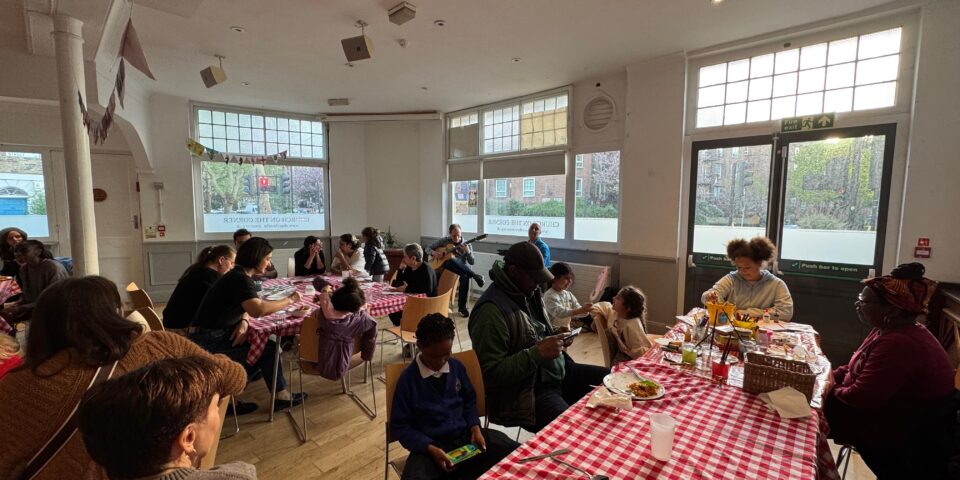
At Church on the Corner in Islington, something simple is transforming lives: a shared meal. Once a month, the Haven Supper Club brings together refugees, asylum seekers and local residents for an evening of home-cooked food, live music and conversation. But behind this simple idea sits a deeper vision of hospitality, dignity and reconciliation.
For Fergus Burnett-Skelding, who helped establish the supper club in October 2025, the project grew out of both personal experience and long-standing passion. “I studied Persian studies at university,” he explains, “and have always been interested in how we treat ‘the other’ in society.”
That interest led Fergus to work with refugee charities during his studies. Later, after becoming a Christian and joining Church on the Corner through the Stepney Ministry Experience Scheme, he began to see how his experience could shape a practical response within the church. At the same time, he was increasingly aware of the wider social context. “There’s a lot of division and misinformation,” he says, “and a real negativity towards refugees and migrants. That has the effect of impeding integration.”
Having previously worked on integration programmes, Fergus had seen the consequences first-hand: isolation, frustration and a gradual impact on mental health. The question was how to respond.
Food, music and friendship
The answer was not another course or programme, but something more relational: a meal.
“I’m an enormous fan of the place of the table in our faith,” Fergus says. “It’s very difficult to break bread with somebody and retain a kind of negativity towards them.”
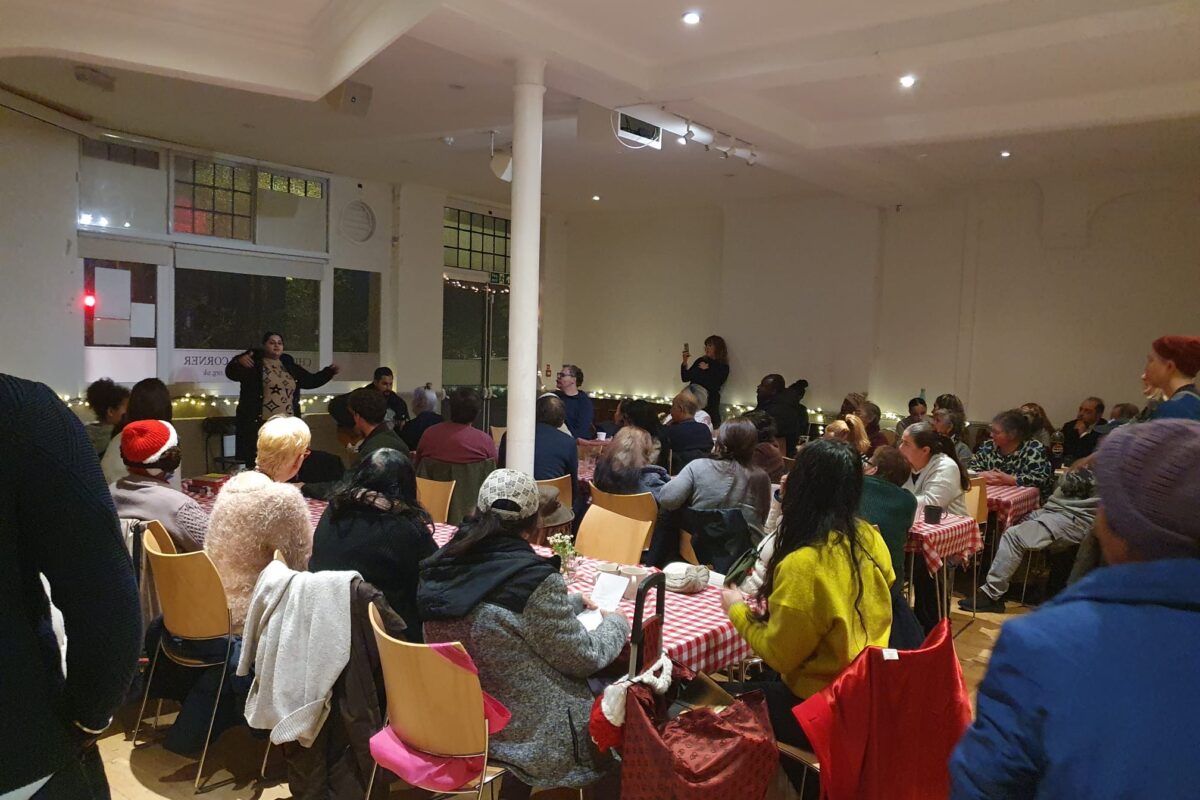
From the beginning, the vision centred on bringing people together as equals—refugees and local neighbours alike. Around 40–50 people now attend each month, roughly split between those new to the UK and those already rooted in the local community.
A key feature of the evening is live music, often provided by musicians with refugee backgrounds. This was a deliberate choice. “If you’re trying to build community,” Fergus explains, “shared emotional experience matters. We often use conversation – but music and dance can do that in a different way. It’s hard to listen to music, to dance with people, and not feel some kind of warmth.” Recent evenings have featured Romany, Iranian and Congolese musicians – each one opening up new connections and breaking down preconceptions.
A different kind of welcome
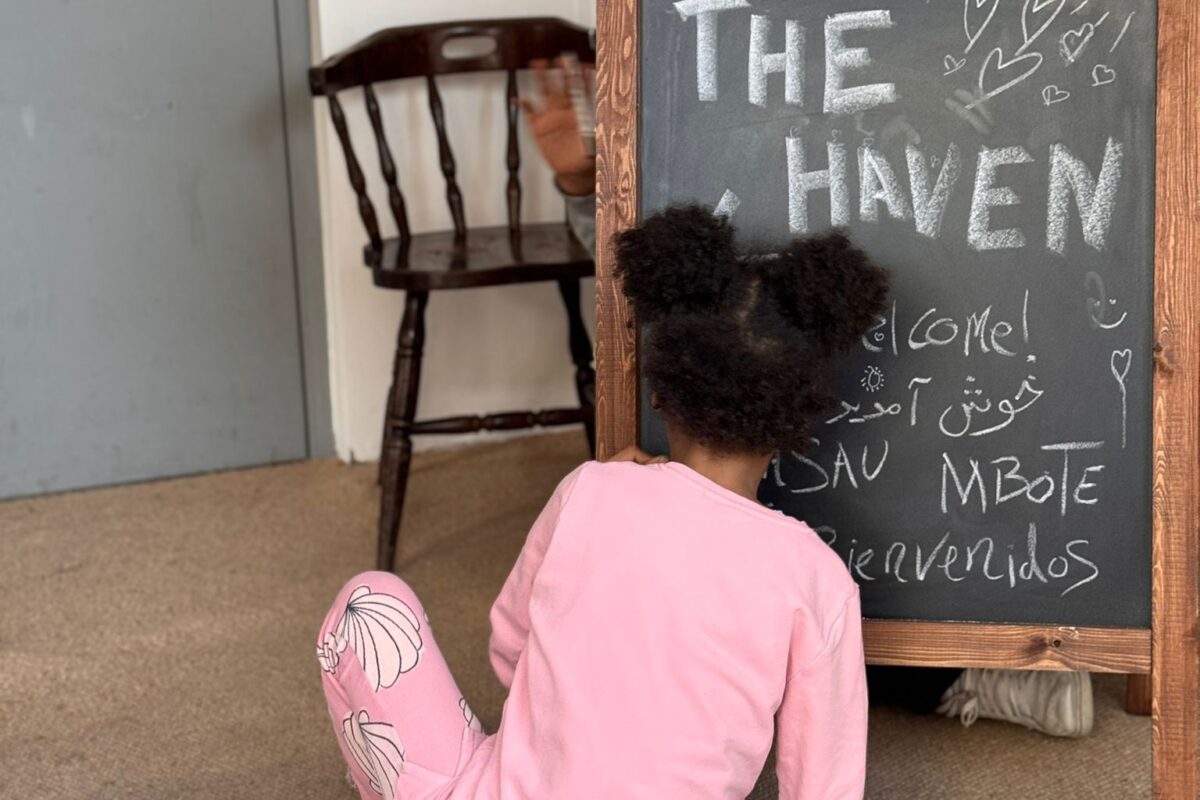
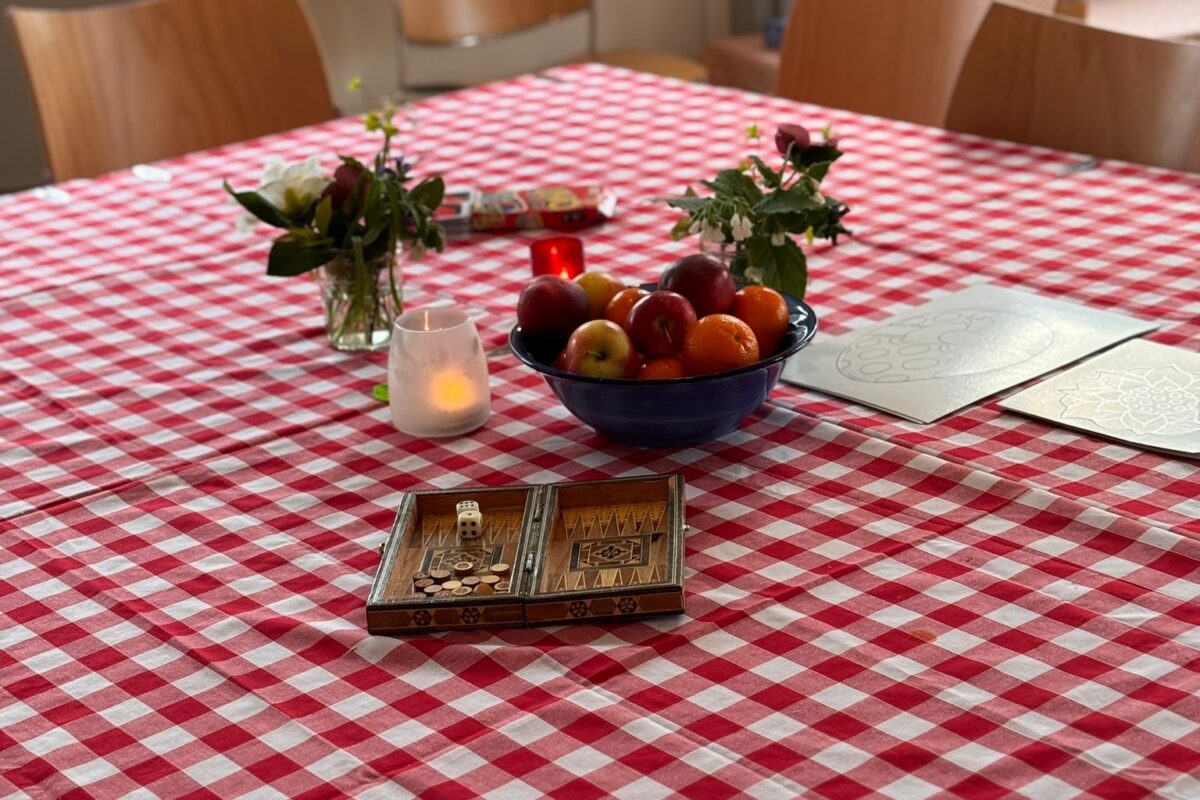
The atmosphere of the supper club is carefully created. Guests eat from proper crockery at tables set with cloths and flowers – small details that carry deeper meaning.
“It’s tempting to cut corners,” Fergus admits, “but we realised that disposable plates give the impression this is temporary. When you create a space you’d want to spend time in, it changes how people feel. It says: you belong here.”
Equally important is the ethos behind the project. Rather than a top-down model of giving, Haven Supper Club is built on participation and reciprocity. Guests are encouraged to contribute what they can – whether cooking, leading craft activities, or sharing music. “Sometimes refugee projects can feel paternalistic,” Fergus reflects. “But there’s something powerful about everyone giving what they have.”
He shares the story of an Iranian family who attend. Their teenage daughter, a gifted pianist and singer, was initially reluctant to perform. With encouragement, she began playing at the supper club and now regularly provides music for the evening.
“As a result, when we’ve offered support to the family, it’s felt like a natural exchange,” Fergus says. “It’s friendship, not charity.”
Faith at the centre
While the supper club is open to all, faith remains central – and, importantly, visible. Each evening closes with a short time of gentle, contemplative prayer.
“I’ll be honest, I was nervous at first,” Fergus says. “Would people feel uncomfortable?”
In practice, the opposite has been true. Most guests stay, and many find the moment deeply meaningful. One attendee told him that the prayers continued to echo in her mind on the walk home. “There’s something about doing it with love and gentleness,” Fergus reflects. “People are very receptive.” The relationships formed through the supper club are already leading to new expressions of faith. Some guests have begun attending Sunday services, and plans are underway to launch a Persian-language worshipping community connected to the church.
Changing the church – and the neighbourhood
The impact has not been limited to those attending as guests. Members of Church on the Corner have found new opportunities to live out their faith in practical ways – cooking, hosting and building friendships.
“I think people are looking for something more costly,” Fergus says. “An outlet for generosity and self-giving.”
At the same time, the project is reshaping how people think about issues like migration. “When you have friends from these communities, it stops being abstract,” he explains. “It becomes: what is Jesus asking us to do in relation to them?”
The wider neighbourhood is also taking notice. Through partnerships with local organisations, businesses and volunteers, the church is becoming known as a place of welcome. “This slightly nondescript church on the corner has become known as somewhere that offers hospitality to refugees,” Fergus says. “That’s a really positive thing for churches to be known for.”
Lessons for others
For churches considering something similar, Fergus offers two key pieces of advice.
First: be clear about your motivation. “Don’t shy away from placing Jesus at the centre,” he says. “People understand faith – even if they don’t share it.”
Second: listen. The supper club grew out of conversations with refugees themselves. “Ask people what they need—and what they would have liked when they first arrived,” he says. “Often, it’s not just practical help. It’s friendship. It’s feeling like you can go out and enjoy an evening again.”
Underlying it all is a simple but challenging conviction: “We need to treat human beings as human beings – with lives, hopes and vulnerabilities,” Fergus says. “There are few people in our society with weaker support systems than refugees and asylum seekers. That’s where we need to step in.”
At Haven Supper Club, that step begins with a table – and an invitation.