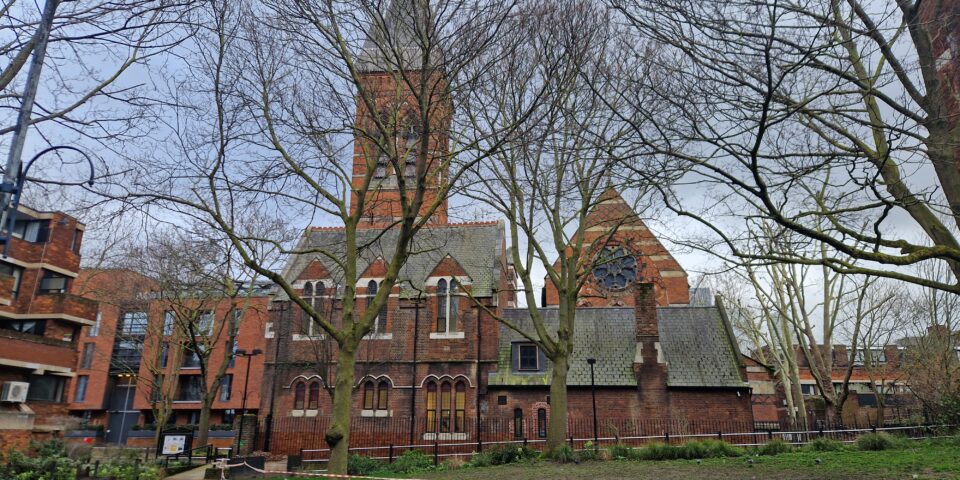
The Church of England has long recognised the challenge of reaching estates and low-income communities. These places, home to millions of people, can feel like mission fields at the edge of the map. Maps always give away the bias of the map maker, our historic bias to the middle class, so to reach our estates and low-income communities we need a new map drawn with local knowledge.
Listening to local experience
That’s what CCX set out to do in 2025 when we commissioned Listening to the Voice of the Estates Planters. Seeking to understand more clearly what restricts and enables church planting and multiplication in these areas across England, not from the outside looking in, but by doing what the title promises, listening. CCX commissioned Revd Dr Cris Rogers to lead the research, designing a process that allowed practitioners to speak candidly about their work, their context and their learning.
Drawing on the experiences of 45 estate church practitioners and insights from 450 working-class participants, the report presents new insights into what helps churches begin, grow and flourish in estate and low-income communities across England.
What helps estate churches flourish
What emerges is a beautiful picture of how estate churches function and the treasures already present in low-income communities. The research surfaces themes that many connected with an estate will recognise. Ministry must be local, is often slow and sadly often without the budget to match the ambition. It highlights the centrality of incarnational presence, the slow work of raising up local leaders, the complex pastoral needs, the boundless hope, and the urgent necessity for appropriate support.
The research also finds that churches are most likely to flourish where they are rooted in long-term relationships, shaped by prayer and patient presence, and supported by appropriate funding, strong local and diocesan partnerships, and realistic expectations about growth. Rather than measuring success by rapid numerical growth, the report encourages the wider Church to value deep roots, local leadership and lives transformed over time.
This research is a map. It is an invitation to be patient, to be rooted, and to learn to measure flourishing differently. It also offers practical recommendations for dioceses, churches and mission organisations seeking to strengthen ministry in estates and low-income communities, recognising the distinctive gifts, resilience and faith already present in these places.
Find out more and read the full report, Listening to the Voice of the Estates Planters, on the CCX website.