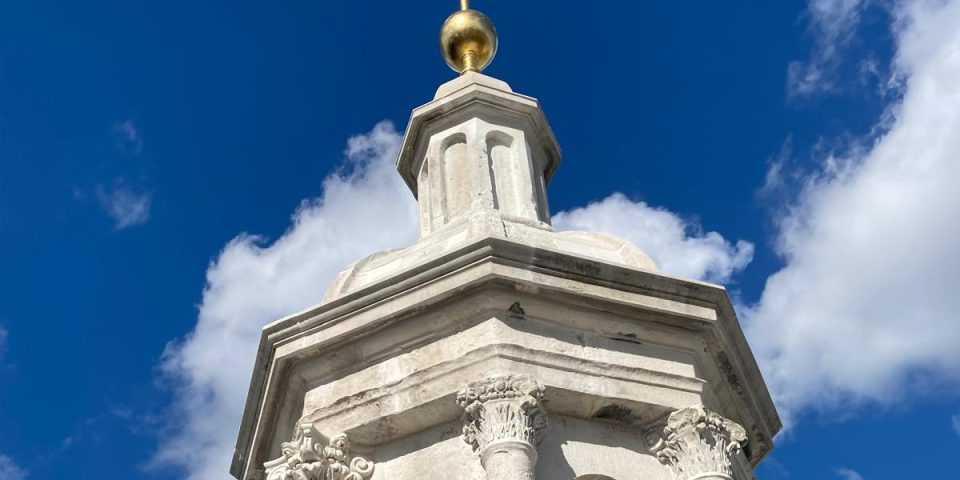
The iconic spire of St Clement Danes, the Central Church of the Royal Air Force, is nearing the end of a major restoration project after ten years of planning, fundraising and conservation work to secure the future of one of London’s most significant historic churches.
The Grade I-listed church on the Strand has a long and distinguished history. Originally rebuilt by Sir Christopher Wren, it was devastated during the Blitz in May 1941, when incendiary bombing left only the walls, tower and spire standing. Following extensive post-war reconstruction, the church was rededicated in 1958 as the Central Church of the RAF.
The latest chapter in the building’s story began in 2015 when a piece of masonry fell from the spire.
“We organised surveys and it became clear that the stonework in the steeple was deteriorating to the extent that bits were spalling off and there were open joints in the stonework,” explained Delva Patman, trustee of the St Clement Danes Church Fund.
Initial investigations revealed deterioration within the historic stonework, caused by water penetration and the corrosion of iron cramps hidden inside the structure. Emergency measures, including steel cabling and protective netting, were installed while experts assessed the scale of the problem.
As further surveys were carried out, structural engineers and conservation specialists concluded that the only lasting solution would be to dismantle the spire completely and rebuild it.
“The best solution was to take the whole thing down, stone by stone,” said Delva.
The task proved even more complex than anticipated. As work progressed, specialists discovered extensive hidden damage caused by the intense heat of the wartime fire. Carbonisation within the structure, together with previous repairs and construction techniques that differed from expectations, meant significantly more conservation work was required.
For the volunteer trustees overseeing the project, securing the necessary funding became one of the greatest challenges.
“We couldn’t raise the money. We were just hitting brick walls,” Delva recalled.
With estimates reaching around £2 million, approaches were made to a wide range of charitable organisations and fundraising bodies. Discussions eventually reached senior levels within the RAF, the Ministry of Defence and the Treasury.
Following extensive negotiations, £2 million was secured to enable the project to proceed.
“We got our £2 million,” Delva said. “We were all a bit gobsmacked.”
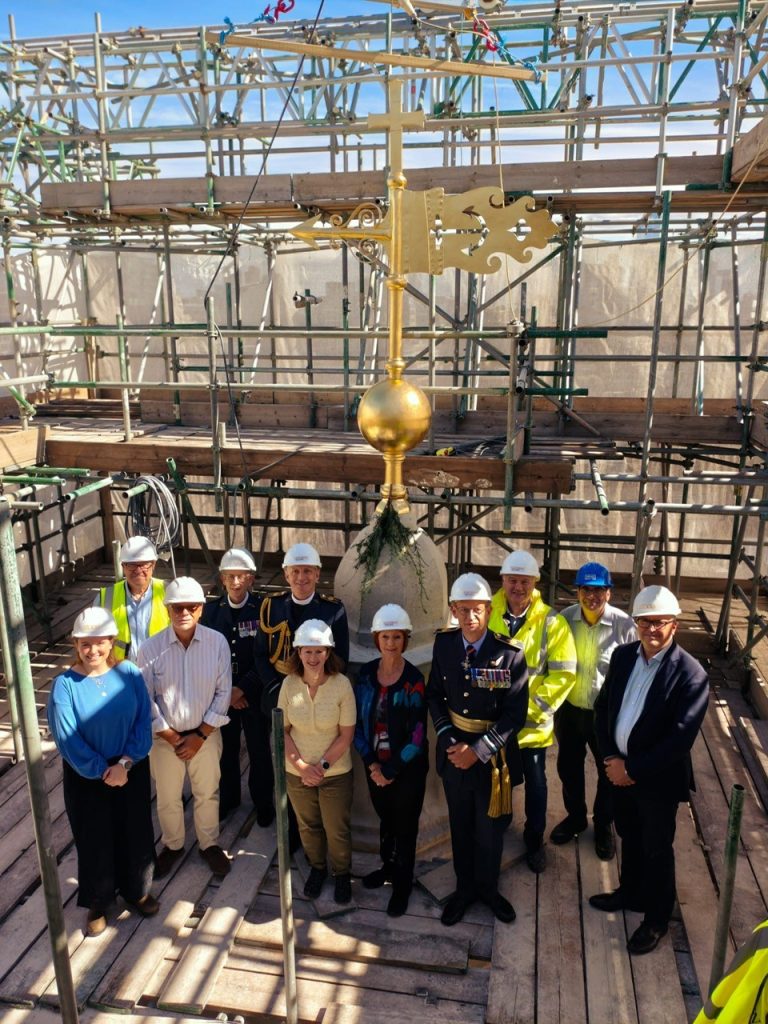
Work finally began in December 2024. Since then, specialist contractors have painstakingly dismantled, repaired and rebuilt the spire, replacing damaged stonework, removing corroded ironwork and restoring historic architectural features.


The project has also provided opportunities to restore the church’s sundial, decorative stone cartouche and weather vane. Contributions from the Friends of St Clement Danes helped fund the weather vane restoration, while the principal west-facing clock face has also been refurbished.
For Delva, the project has always been about more than preserving a prominent London landmark.
“It’s not just a ceremonial building. It’s a place of history,” she said.
As the Central Church of the RAF, St Clement Danes houses memorial books commemorating those who lost their lives while serving in the RAF, alongside numerous memorials reflecting the service’s history and heritage.
The project team has also looked to the future. A time capsule containing photographs, drawings and records of the restoration has been placed within the rebuilt spire, creating a lasting record for future generations.
With the scaffolding now almost completely removed, attention is turning towards a major celebration planned for April 2027, which will coincide with the RAF’s annual commemoration of its foundation.
Reflecting on a decade-long journey, Delva paid tribute to the many people who helped bring the project to completion, including trustees, contractors, RAF personnel and supporters from across the Diocese of London.
“It’s been a joint effort all the way down,” she said. “We’ve just not let obstacles get in the way.”
The restoration of the St Clement Danes spire not only secures an important part of London’s built heritage, but ensures that the church can continue its ministry and role as a place of remembrance for generations to come.


