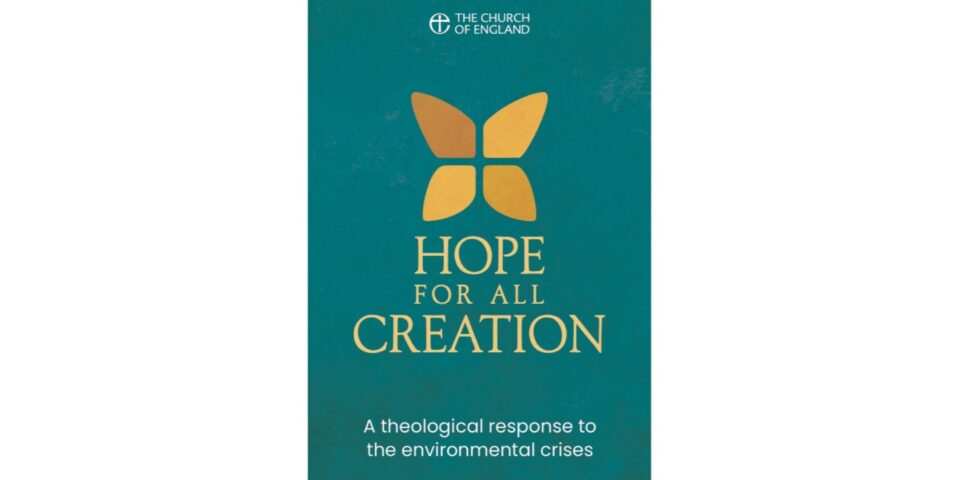
The Church of England’s House of Bishops has published Hope for All Creation: A theological response to the environmental crises, a new teaching document produced by the Faith and Order Commission that explores how Christian faith shapes the Church’s response to climate change, biodiversity loss and the wider environmental crises. The publication seeks to help the Church think, reflect and act in response to today’s ecological challenges, drawing on Scripture, Christian tradition and the hope found in Jesus Christ.
The document begins by affirming that “we have been gifted a world of breath-taking beauty, astounding abundance and intricate interconnection” before acknowledging that human activity is placing increasing strain on the climate and ecosystems on which life depends. At its heart is a message of Christian hope. God has not abandoned creation, and the Church is called to live faithfully in the light of Christ’s reconciliation and the promised renewal of all creation.
The Rt Revd Dr Anderson Jeremiah, Bishop of Edmonton, is a member of the Theology and Environment Working Group that produced the document. In the foreword, the Archbishops of Canterbury and York commend Hope for All Creation “as a guide to faithful living in our time, as a resource for Christian ministry, and as a contribution from the Church of England to discerning how we exercise wise, responsible stewardship of the planet we share.”
Bishop Anderson said:
We have been given a world of extraordinary beauty and intricate interdependence, yet we also live at a time when that gift is under profound strain. This document invites us to see the environmental crises not simply as scientific or political challenges, but as questions of Christian discipleship. It reminds us that our hope rests not in ourselves, but in the God who loves, sustains and will renew all creation. My prayer is that it will help churches reflect more deeply on how our worship, our witness and our common life can bear faithful testimony to that hope.
Structured in three parts, See, Reflect and Respond, the document first examines the environmental crises facing the world. It then offers a theological reflection rooted in Scripture and Christian tradition before considering how Christians and churches might respond locally, nationally and globally.
Churches and individuals are encouraged to explore the document and its accompanying resources. A dedicated series of Everyday Faith reflections will also accompany Creationtide in September.
Resources