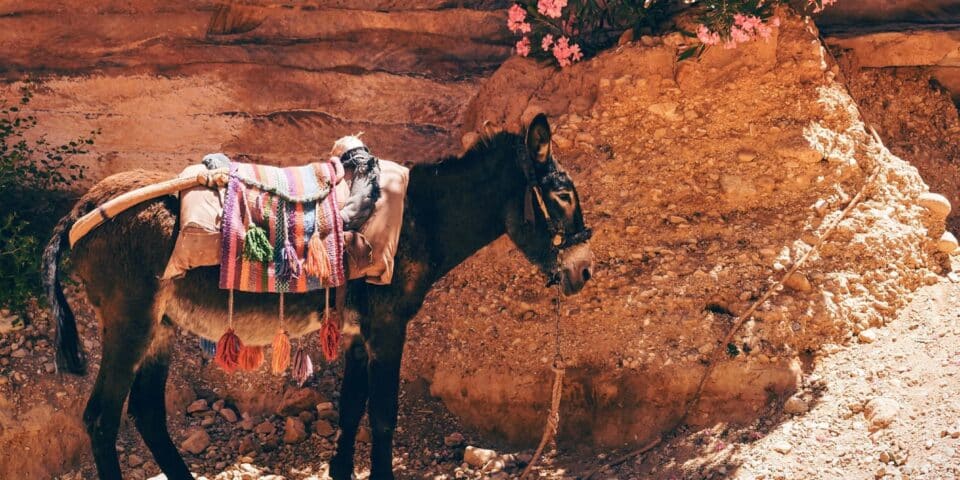
James Fawcett explains why youth workers are often the donkey in the story of the good Samaritan.
Recently, I was talking with my 5 year-old daughter about the story of the good Samaritan (this happens to be my favourite Bible story — it was also the one used in Godly Play at Church). When I asked her who she would like to be in the story, she looked at me and thought about it for a while. I was hoping for some kind of profound answer, so with the weight of parental expectation heavy in the room, she says “I think I’m the donkey.”
“The donkey?” I reply…(with clear levels of disappointment in my tone). “Yes….the donkey” she says.
We had a little chat about why she chose the donkey. She felt the donkey was essential to the story, otherwise how would the Samaritan have got the man to the inn? The donkey is “just really helpful and I want to be really helpful to people” (profound…and totally right. Parental pride – tick!).
The donkey is fundamental to the story; how would the Samaritan have carried the man otherwise? This got me thinking.
So much of what we do as Christians working with young people is like the work of the donkey in the good Samaritan story. However, we often place ourselves in the role of the good Samaritan; we are the ones helping young people, physically, spiritually, emotionally, etc.
Sam Wells suggests in The Nazareth Manifesto that the hearers of this story would have related most to the beaten-up man and therefore, their salvation is found in the good Samaritan.
However, we are often in the place of the donkey (or at least, it can feel like that), emotionally carrying the dead weight of “the young people” on our shoulders. This sacrificial giving of one’s self is completely unglamorous, yet absolutely crucial to the story of salvation for “the beaten up man” — young people in our case.
The role of the donkey is so overlooked and unrecognised; I had never considered the donkey in the story until yesterday. Similarly, the role of those working with young people can go unrecognised or be unquantifiable. We can be completely missed by those observing the stories forming in young people’s lives; church members, colleagues, managers, whoever — yet we feel the weight of those young people. This can create in us a lack of self-worth in what we do, but also shrink the role we’ve played in those stories, so we either forget about it or refuse to ascribe value to what we do. Yet, we soldier on.
Donkeys everywhere: you are worth it!
[flick of the mane]
Seriously though, whatever you do, whether voluntary or paid, you play a key role in the life of young people. Don’t underestimate what you do. We have a collective responsibility to hear the (ee-orr!) voice of the donkey and recognise the story of carrying the young people we work with.
Don’t hold back from sharing what you do for the young people that come across your path. Talk about:
- those fleeting conversations at the back of church;
- the ‘liking’ of Instagram posts and the WhatsApp conversations;
- the prayers said for young people in exams;
- the journey in the car on the way to an event;
- the hard work you put in preparing a session to make sure all the needs were catered for in the group;
- those extra one-to-one sessions you set up to support people.
Share all your stories, because they mount up to something of huge significance.
Go donkeys go!!!
