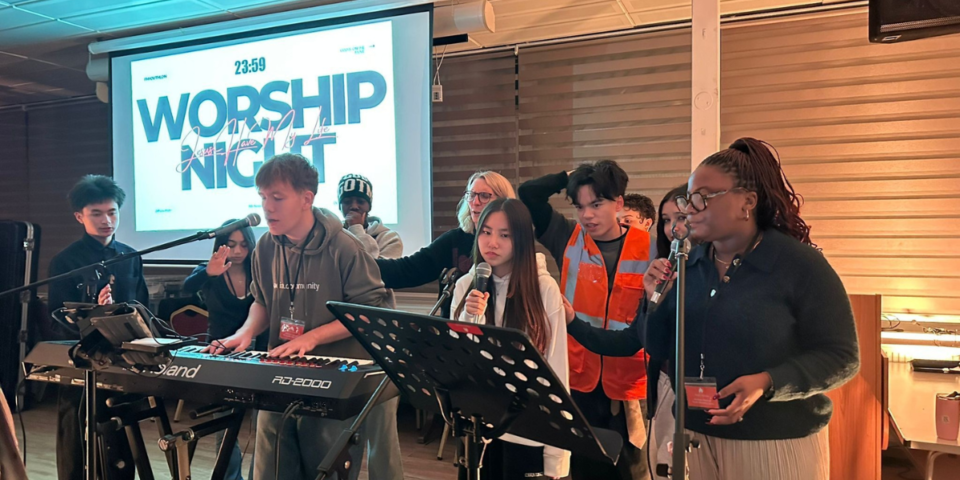
Young people at Faith House Church in Colindale are discovering a faith that is personal, chosen and deeply transformative. Through worship, belonging and honest reflection, teenagers share how church offers peace, hope and a sense of purpose in a challenging world.
On Sunday evening at Faith House Church in Colindale, north London, teenagers lead the room. The youth-led Evening Service is shaped by young people themselves through worship, prayer, and honest reflection on faith amid the realities of modern life. It is relaxed but intentional, expressive yet thoughtful. Beneath the music lies something more significant: young people choosing church for themselves.
From obligation to choice
“There’s nothing better to do on a Sunday than go to church,” says Nida, smiling. The comment sounds casual, but her journey tells a deeper story.
Like several others in the room, Nida once experienced church as obligation. “My mum would drag me out of bed,” she says. Even when she first began attending Faith House, she did not feel particularly invested. “I didn’t know anyone. I didn’t really care that much.”
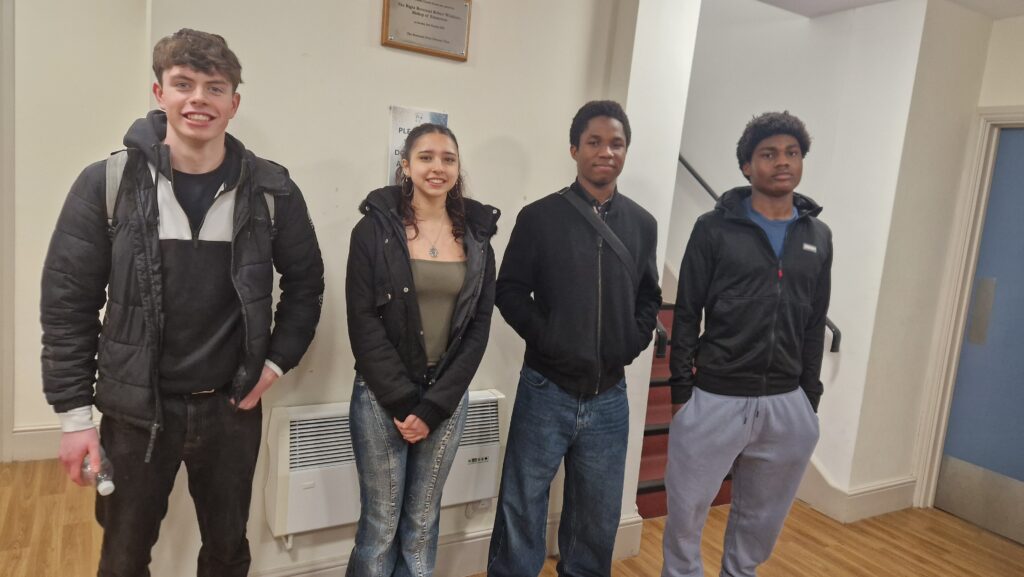
Chris, Nida, Jonathan and Clinton
The turning point came at a church camp. There, she describes sensing God personally rather than simply participating in ritual. “It stopped being my mum telling me I had to go,” she explains. “It became me saying, ‘We’re going to be late for church.’ I set my alarm because I want to go.”
Chris tells a similar story of movement from routine to relationship. After stepping away from church for a time, he found his perspective changing. “It became less of something I had to do and more of something I wanted to do,” he says. “Instead of thinking, ‘I’ve got to go,’ I think, ‘I get to go.’”
Belonging, identity and community
For many of these teenagers, belonging is central. At school, conversations about faith can feel isolating. “Sometimes you feel out of place,” Chris explains, particularly when values clash with those around him. In church, however, “everyone’s got the same beliefs. It feels nice.”
Jonathan agrees. While he has Christian friends, there are moments when openly discussing faith is difficult. “It’s peaceful here,” he says quietly. “I haven’t had the most peaceful life growing up, but here it clears my mind.”
That peace extends beyond Sunday evenings. Church shapes the rhythm of the week. Clinton describes how it influences daily choices: “It affects how you think, how you act as a person. You start your week with God. It makes you ready for the week.” Michelle adds, “Every Sunday I learn something, and it convicts me for the entire week. I’m thinking about what I learned and how I can be better.”
Faith under pressure
Yet they are clear-eyed about the pressures they face. “Very hard,” Jonathan says when asked whether it is difficult to be a Christian at their age. Peer pressure, mixed messages about identity and constant exposure through social media all contribute. “The whole world is at your fingertips,” Chris observes. “It’s easy to fall into things.”
Nida highlights another challenge: scrutiny. “People look at you like you’re crazy or deluded,” she says. “They watch everything you do to try and catch you out.”
Peace, worship and a lived encounter
Despite this, experiences of faith feel tangible. Jonathan recalls a summer trip where he sensed God dealing with years of unforgiveness after being bullied. “I could feel that weight of unforgiveness going off my shoulders,” he says. “Most times now I don’t think about things like that. I knew it was Jesus Christ doing that for me.”
Others point to worship as the place where faith becomes real. “You can feel the Holy Spirit,” Chris says. “There’s no possible explanation apart from God.” Clinton describes a deep conviction while leading worship that “this can’t be ordinary. God is definitely here.”
When asked why church still matters for young people today, Michelle’s response is immediate and wholehearted.
“Because when you feel like no one else is there, when no one else is listening, remember that Christ is there,” she says. “Christ is that hope, that light in the darkness, that strength. When no one else is there to give you that warmth or that hope, Christ is there.”
“The church is somewhere you can run to the Father, to someone who cares, someone who won’t forget you and someone who won’t leave you. That’s why most people still go to church: remembering that the Saviour is there.”
Clinton adds quietly, “Most people do not have peace. They might be smiling, but deep down they’re not happy. That’s where they find comfort.”
In a cultural climate often described as spiritually disengaged, these teenagers offer a different narrative. Their faith is not inherited passively or performed socially. It is chosen, tested and experienced.
What is unfolding in this north London church may be quiet, but it is not shallow. It is young people discovering that belief can anchor identity, that community can sustain conviction, and that faith, when encountered personally, is worth giving a Sunday evening to.