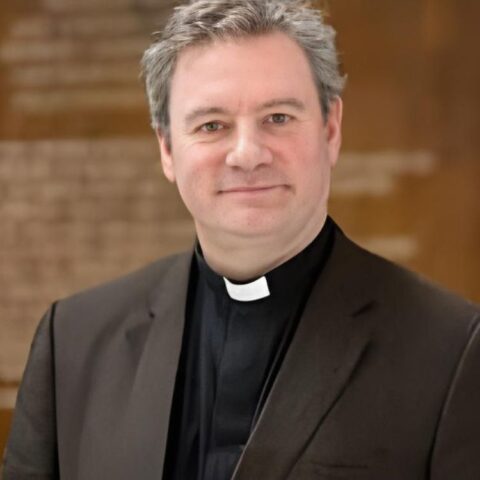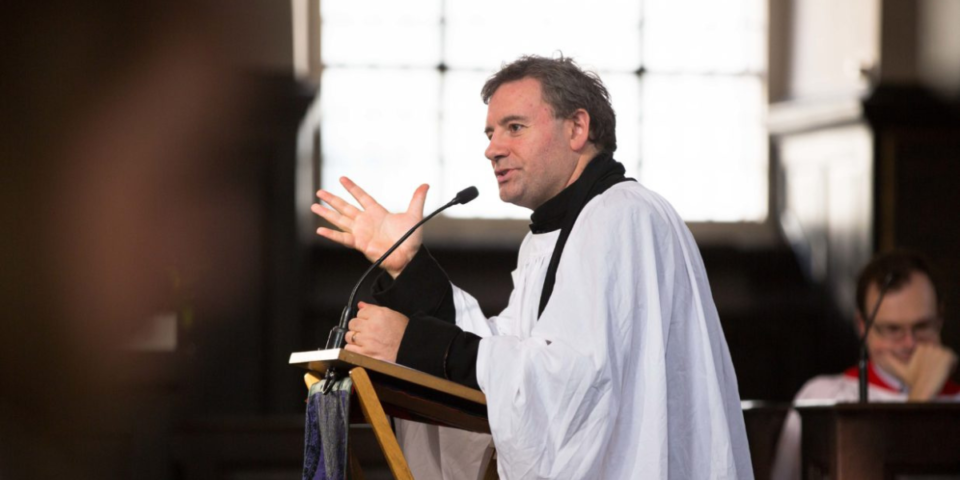
A sermon preached at St Martin‑in‑the‑Fields on January 18, 2026 by Revd Dr Sam Wells, exploring why the Church marks Racial Justice Sunday, the deep stories behind racial inequality, and the Christian call to future hope, present action and truthful remembrance of the past.
Why does the church have a Racial Justice Sunday? There are two reasons. If we imagine a tree, one is the cross-section, the other’s the whole trunk. The cross-section can be communicated in five statistics. Unemployment is twice as high for minority ethnic populations than for white people. Caribbean-heritage people are excluded three times as much from school as white pupils. Black people are prosecuted and sentenced at three times the rate of white people. Minority ethnic populations experience poverty at twice the rate of white people. Black African women are detained under the Mental Health Act at seven times the rate of white women. In other words, across employment, education, crime, living standards and health, we live in an unequal society, and race is a huge indicator of inequality.
A Long Story of Presence and Exclusion
The tree trunk is different from the cross-section. It isn’t about statistics. It’s about a story. There’ve been Black people in Britain since Roman times. There’s a celebrated trumpeter in Henry VIII’s entourage, and numerous sailors and freed slaves appear across the centuries. It’s thought Queen Charlotte, wife of George III and great-grandmother of Victoria, was descended from a Black branch of the Portuguese royal family. There were so many Black people in Britain after the First World War that there were race riots in Glasgow, Liverpool and Cardiff in 1919. When the Windrush generation arrived from 1948, race discrimination in housing and employment was widespread and remained legal till the 1960s. Caribbean people were given a frosty reception in parish churches. While the first Black priest dates back to 1793, the first Black bishop had to wait till 1985. For so long associated with the colonial inheritance, racial diversity in the UK today is now also influenced by anxieties over migration, mostly from hostile or war‑torn societies, and other faiths – Hinduism and especially Islam. Very recently a conservative Christianity has joined forces with anxiety over migration and fear of social change to form an assertive, nostalgic Christian nationalism. It amplifies a story where the contributions of diverse races have invariably been treated as a threat to be suppressed rather than a gift to be celebrated.
The Paradox of Race
So the statistics and the story go together like a cross-section and a whole tree trunk. The paradox about race is that deep down, beyond discrimination, prejudice, violence and oppression, race is simply a construction. In How to Argue with a Racist, Adam Rutherford calculates, ‘Over a 500-year period, you have 1,048,576 ancestors.’ If you go back 1000 years, the number of your ancestors is more people than have ever existed. This is because the same individuals appear in your family tree multiple times. In other words, we are all interrelated. Hence, ‘Every Nazi has Jewish ancestors. Every white supremacist has Middle Eastern ancestors. Every racist has African, Indian, Chinese, Native American, Aboriginal Australian ancestors, as well as everyone else.’ Rutherford concludes, ‘Racial purity is a pure fantasy. For humans, there are no purebloods, only mongrels enriched by the blood of multitudes.’ So the most misleading, yet emotive, word in the whole discourse is the word ‘pure.’ Purity assumes a false story of racial homogeneity. Such a story is indefensible historically but crucial to a constructed sense of belonging that’s perpetually under threat and relies on excluding others. The irony of white supremacy is that if there really was such a thing as white and it really was superior, it would naturally prevail and wouldn’t need any asserting. Whereas it turns out poor little defenceless white supremacy needs lies, violence, manipulation and cruelty to save it from extinction.
The Reality of Racial Harm
However, the other side of this paradox is that, while race may not exist, try telling that to someone who’s been stopped and searched, been asked to leave a bar, been told to ‘Get back where you come from,’ had monkey noises shouted from a distance, been told they weren’t welcome in their boyfriend’s family home, been overlooked for a job, or patronised or stereotyped or described as not British, or been subject to threats, kicks or punches. This is the paradox: race doesn’t exist, but it’s everywhere around us.
Racial Justice for the Future
So what then does racial justice mean? I suggest it’s about the future, the present and the past. In the future it means a significantly different society and church. People of diverse races are centred, and their skills and experience normalised rather than overlooked or demeaned. People of minority ethnic heritage find their opportunities uninhibited, and legal, educational and housing barriers dismantled. Economic inequality becomes negligible, stereotyping ceases to pervade society, and everyone is valued for the positive contribution they make, not diminished by someone else’s ignorant prejudice about them. This is not simply about the rectification of individual wrongs; it’s about the emergence of a culture where such wrongs are unthinkable.
Racial Justice in the Present
In the present, racial justice means all actions designed to bring this future state about. It means legislation, training, policies, accountability, modelling, mentoring, education, celebration. Perhaps most uncomfortably, it means making oneself unpopular by continuing to highlight inconvenient truths. For example, for those who like football, who wants to hear that 40% of Premier League players are minority ethnic but in the 34 years since the Premier League began, 300 of the 312 managers have been white? In public service, who wants to discover that among firefighters, 4% are minority appointments, and among police officers 8%, compared to an overall population figure of 18%? Justice in the present means keeping these facts in places where they cause the whole nation discomfort until those facts change.
Racial Justice and the Past
There’s no question a huge amount of energy is spent on the rights and wrongs of racial justice in the past. Take for example the historic Atlantic slave trade. The Church Commissioners have set aside £100 million to address the Church of England’s historic involvement in slavery. I went to school in Bristol, have lived in Liverpool, have visited Glasgow many times and now live in London. The fine architecture of these cities leaves one wondering where this wealth came from. The answer isn’t hard to find. The Bible often speaks of visiting the sins of the fathers on future generations. It seems unjust to hold someone responsible for a forebear’s crimes. But it also seems wrong that people continue to benefit from historic crimes while descendants of those against whom those crimes were committed continue to experience disadvantage.
Currently there’s a culture war between some who believe in offering penitential gestures and financial recompense, and others who disagree – on the grounds of dangerous legal precedent, counterproductive outcome, difficulty in identifying appropriate recipients or repudiation of the whole notion of being made to feel guilty. These are such difficult waters to navigate. It can feel like heart versus head. But my sense is if we were doing a better job with racial justice in future and present, the pressure on righting the wrongs of the past would be correspondingly alleviated. We can’t change the past, although we must resist attempts to deny it and refuse to permit its entrails to continue to poison the present. Whatever we decide about reparations, we must continue to focus our energies on future and present, not just the past.
Christian Vocabulary for Justice
Amid the sophisticated language of structural inequality and systemic injustice it’s easy for ordinary Christians to feel intimidated and to retreat behind a general sense of church and social failure and individual impotence. So it’s important to recall the church has its own vocabulary around these things. It’s commonplace to recognise that in the colonial era white Europeans assumed there was but one human identity, one human good, one human destiny – and by astonishing coincidence found that that universal identity, good and destiny was their own. In place of ‘universal,’ Christianity has the word ‘catholic,’ which means a conviction that in Christ there’s a fundamental human persona, and there are myriad ways we differ in the way we relate to Christ. In place of ‘identity,’ Christianity has the word ‘baptism,’ which means our destiny with God is more foundational than our race, sexuality, gender, class or other signifier. In place of ‘diversity,’ Christianity has the word Pentecost, which, unlike Babel, portrays difference as gift and creative tension as dynamic opportunity. In place of conflict, Christianity has the word ‘church,’ a community in which everyone brings their different gifts to the table and receives back the same, in which all discover they are one body whose purpose is to glorify God through truly enjoying one another.
Turning Theology into Action
But the test of these convictions about catholicity, baptism, Pentecost and church is the way we turn them from theory into practice. Some months ago, in a suburb of Leeds, a protest began outside a hotel that houses 200 asylum seekers. Not long after, local Christians started to gather across the road in a counter protest. They said these are not violent people: some go to our church. They do not pose a sexual danger to local women: such stories are inflated, exaggerated and manipulated. They are not a drain on the welfare budget: they contribute hugely to the economy. The Bishop of Kirkstall started to visit both protests, and brought home-made cupcakes, some plain and some with St George crosses. Eventually he persuaded the leader of the protests to join him for a coffee. Then he managed to get the leader of the counter protest to come too. The meeting ended with an agreement that they would find six people from each side for a private meeting. The point is not whether protest or coffee is the answer. The point is that this ministry is about catholicity, because it’s saying there’s a place for everyone; it’s about baptism, because it’s saying our belonging in God is our foundational identity; it’s about Pentecost, because it’s saying difference is gift; and it’s about church, because we discover God when we realise we need each other.
A Story of Leadership and Hope
The Bishop of Kirkstall was born in Birmingham, the son of a Hindu and a Sikh. This is not a story about a white saviour reconciling and spreading harmony. It’s a story about the country and the church we now are: a story that centres a person born in this country and coming to embody its virtues in the face of hostility and division. It’s a story of the power of the truth in the face of lies and manipulation. It’s a story of a person who has found a way through bias, suppression, disadvantage and exclusion, and is exercising leadership and modelling a very different future. It’s a story in which we see the Holy Spirit at work through a person whose heritage lies outside this country but who, unlike 40% of Londoners, was born here; and that 40% includes me. It’s a story about catholicity, baptism, Pentecost and church. It’s a story where, in the face of hostility, a small group of people are standing up for what’s right. It’s a story of empowerment, realism, solidarity, vision, courage and rugged holiness. It’s a story of racial justice. It’s a story that tells us that every Sunday is Racial Justice Sunday.