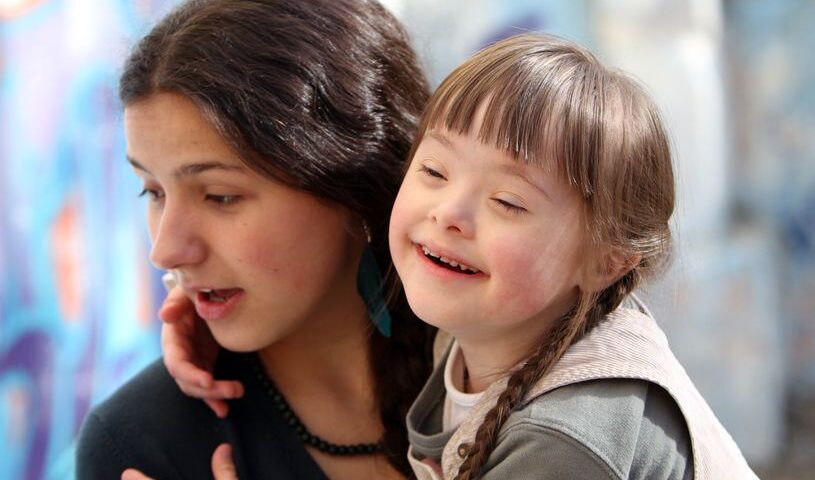
We are all welcome to come to Jesus, no matter who we are, what baggage we bring with us or what we’ve done. Jesus’ call is open to everyone. But how much do we communicate that within out groups? Sometimes we focus on what might be called a traditional way of doing things, but that might not be the best way for all the children who attend.
Sometimes in our ministry with adults, our practices can be too inflexible to welcome those who have different needs from others. Just like adults, children have a variety to different needs and behaviours, whether they have been diagnosed with anything specific or not. Adult, children’s and youth ministries all need to be ready to welcome everyone, not just those who conform to our current way of doing things. If we’re seeking to make our children’s ministry more inclusive, then there are steps we can take, even if we don’t currently have children with additional needs as part of our community.
1. Use clear, simple language
Sometimes, we can over-complicate things, and that includes the way we talk about Jesus or give instructions about what happens next. We need to be aware of the words we say and how we use them. Give clear, simple instructions about what you’d like children to do, and be as literal as you can be. British people have a curious etiquette around language, but many children can’t pick up on those nuances. Those with ADHD or ADD (attention deficit hyperactivity disorder and attention deficit disorder) won’t remember a long list of instructions. Those on the autistic spectrum will miss your nuance or implied meaning. Don’t say, ‘Keith, would you like to come over here?’ as you might just end up with the answer ‘No’!
2. Provide picture or symbol schedules
Some children, particularly those on the autistic spectrum, get anxious if they don’t know what’s happening next, or if you ask them to stop one activity and change to another. Having simple a picture or symbol schedule of your session will help children know what’s coming up and manage a transition more smoothly. If possible, give a five-minute warning before the end of an activity, so nothing comes as surprise! Pictures and symbols will also mean that dyslexic children aren’t being forced to rely on words, which they may not easily be able to read.
3. Create a time-out space
For many children with additional needs, there may be a part of the programme that gets too much for them, so much so that they need a break. Set up a corner of the room where children can get away from the hustle and bustle of your session. Provide bean bags or rugs to sit on, books to look at and maybe even some noise cancelling headphones (some children with autism or ADHD struggle with lots of loud background noise).
4. Break up your programme with different kinds of activities
Some children struggle to stay still for too long, so intersperse quiet activities with ones which help children to burn off energy. Even without children with any particular additional needs, you’ll be surprised how a running around game helps to refocus minds! Giving children jobs (handing out felt-tip pens, moving a chair etc) can also give them focus and harness their enthusiasm
5. Have plans that everyone can join in with
Once you have planned a session, think through how different children can join in. If you’ve got an active game, how might a child with mobility issues take part? If you’re doing a craft, could a child without the necessary fine motor skills be able to create the piece?
This is not an exhaustive list, it’s just the beginning! Do some reading (this is a good start). Each child is different; chat with parents and carers so that you know how best to include their child in the group. And first impressions count. Parents will make a decision on whether to attend your church based on how their child is welcomed. We need to be ready to show the love of Jesus in all ways to all children!
Alex Taylor is Children’s Ministry Trainer for the Diocese of London. He likes Bolton Wanderers, sticky toffee pudding and the Eurovision Song Contest.