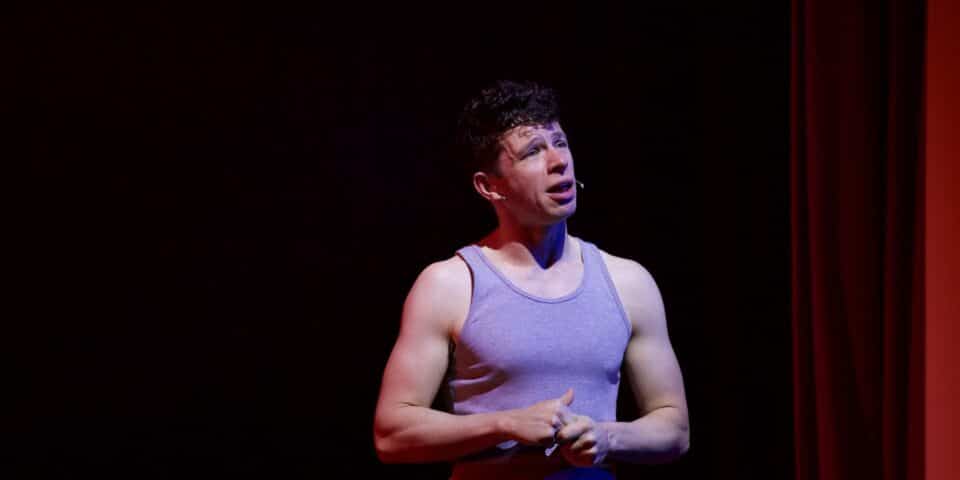
I’m a big show-off. I don’t deny it. A couple of weeks ago, I was on stage in A Chorus Line. It’s a musical set in 1975, about dancers auditioning to be in the chorus of a Broadway show. The audition becomes more like an interview, or even therapy, as each of the dancers reveals something of their own personal story.
My character was called Paul. He is very reluctant to share anything of his life because he is ashamed of what he has done in the past: while everyone else is giving away details of themselves, he sings ‘Secret, my whole life was a secret.’ Yet, halfway through the second act, he is finally encouraged to tell his story:
He was bullied as a child and, having told his Catholic principal that he was gay, was persuaded to quit school. He fell into working at a drag club, behind his parents’ back. He tried to leave, but couldn’t because his lack of an education meant he couldn’t get another job. Things finally came to a head one night when his parents turned up while he was mid-performance. The trauma of retelling his story and reliving the experience – the shame and embarrassment – causes him to break down in tears.
By today’s standards, Paul’s story can seem quite tame. But the more I thought about his life and how to portray it, the more I realised that the massive pain Paul felt was the sum of the many small defeats he had suffered over the past 15 years or so. He had been beaten down by successive failures.
This led me to wonder what I would do if a young person told me a life story that was similarly full of the shame and pain of many small defeats. Where would I start? How could I most effectively support them? The same question came to me when I read Rachel Mann’s thought-provoking article on supporting transgender young people in Premier Youthwork. I’m not the most compassionate or emotionally perceptive of people (it’s often joked that I’m dead inside), so how could I help?
Well, as Rachel points out in her conclusion, it’s important to be there to listen. Paul had never told his story before he walked into that audition – if someone had been there for him before then, he might not have been so weighed down by his life and the path he had taken. Many young people don’t have adults who will simply sit and listen to them without judging them, or without trying to fix their situations.
Sometimes we can’t see what we can do to help, apart from listening and praying. But helping young people give voice to their anxieties, fears and worries is often a first step in the (potentially long) journey to coming to terms with their situations, adjust to new ways of living or make changes that need to be made. There might be things that can be done further down the line, but simply listening can be enough to start with, and we all have ears, even emotional idiots like me.
Alex Taylor played Paul in Company MK’s production of A Chorus Line in October 2015, and has worked with young people for 20 years.
Photo: Will Commercial Photography