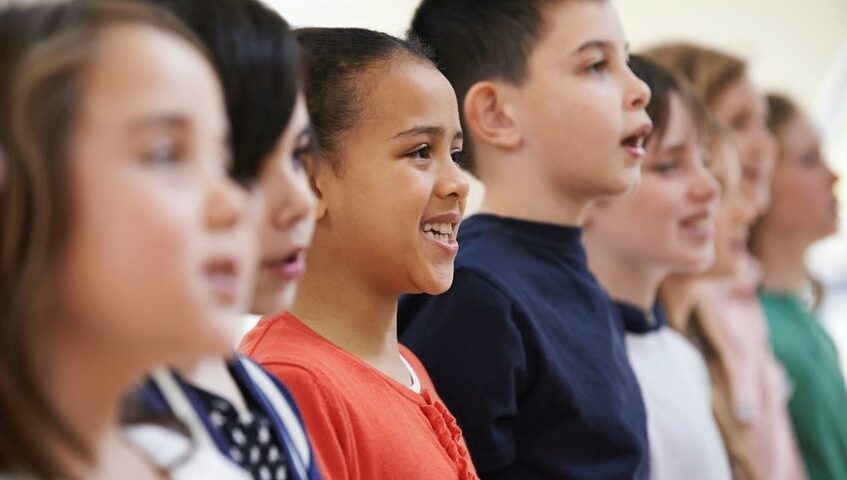
Most children love to sing. And there are lots of great children’s songs out there. However, you might have been scarred by being forced to do the actions to ‘If I were a butterfly’ and are now wary of any kind of children’s song! Don’t be – sung worship remains a prime way for all ages to connect with God and praise him. So here are a few pointers:
Choose your songs carefully
Look at the words and make sure that children will be able to understand them. At the same time, try to assess if, by singing a song, you’re asking children to sing words that they might not believe. This is particularly true if you have lots of children from outside your church community in your group. While it might seem wonderful to have lots of children singing about loving and following Jesus, it’s not entirely ethical. Look for songs that are non-confessional (ones that don’t contain phrases such as ‘I believe’).
Mix action and non-action songs
Most children love to sing actions, they’re fun, energetic and engaging. However, if you use too many of them, they lose their impact. Times of sung worship become about doing the actions, and not about the words that are being sung. Use a mix of songs with actions and songs without to help focus children’s minds on praising God. This helps action songs keep their punch! (Not literally, please don’t encourage punching each other…)
Keep a short list of songs
Children love repetition – it helps them to learn, to feel safe and to take part. Introducing too many songs will mean that children won’t become familiar with the words and won’t be able to think about what they mean. In the same way, don’t have too few. Singing nothing but ‘Our God is a great big God’ (lovely as it is) will only lead to madness.
Don’t be afraid of a quiet song
Sometimes we think that all our children’s work has to be fast-paced and lively, but focusing only on the high-energy aspect of children’s work means that we deprive children of the chance to be still and reflect. Having a couple of quieter songs in your ‘set list’ means that children will be able to worship God and connect with him in a different way, one which might suit them better than singing loudly and jumping about.
Take part in the sung worship times yourself
Children learn by watching others. If you don’t take part in the singing with the children, they’ll soon come to the conclusion that sung worship is not important and stop taking part themselves. If you joyfully sing, reflect on the words and meet with God in your times together, the children will see your faith in action and want to do the same themselves.
So enjoy singing with your group! If things don’t go according to plan, that’s OK, but come to your times of sung worship expecting the children to meet with God and grow closer to him.
Alex Taylor is Children’s Ministry Trainer for the Diocese of London. He hates the song ‘If I were a butterfly’.