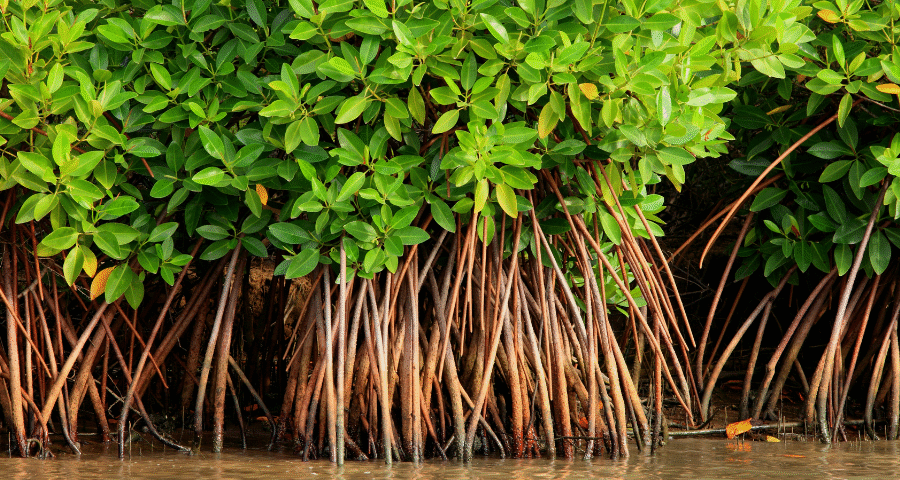
Revd Aurelio Uqueio of Inhambane Diocese shares Mozambique’s story of resilience at COP30. Amid floods, heatwaves, and storms that destroyed homes, schools, and livelihoods, hope endures through mangrove restoration, tree planting, and youth-led initiatives like “sports for sustainability.” Rooted in faith, these efforts turn prayer into action, calling the global Church to care for creation and advocate for climate justice.
As global delegates gathered at the United Nations Climate Change Conference also known as the Conference of the Parties (COP30) in Belém, Brazil, their discussions of policy and finance were framed, for me, by a brutal reality: the lived experience of climate change in places like our country, Mozambique.
Our geographical position leaves us exposed to recurring climate extremes: rising temperatures, prolonged droughts, floods, and violent storms.
In 2022, rising sea levels and severe flooding struck Maxixe, in Southern Mozambique. My pastoral residence was badly damaged and partially destroyed, forcing us to postpone a wedding. The Diocesan Offices were also partially destroyed, and most of the Church’s documents were lost. Ninety-six families from my parish lost their homes—67 partially and 27 completely. It was deeply tragic, and the struggle to rebuild and recover belongings was long and painful. Farmlands were completely destroyed, scarred by severe erosion.
Our Communities and the Struggle for Survival
Our communities rely entirely on small-scale family farming. In 2023, a devastating heatwave burned every crop—maize, peanuts, beans—leaving nothing behind. This catastrophe brought two consecutive years of extreme hunger.
Faced with this and other hardships, many young people were forced to leave, seeking refuge in the capital, Maputo, or crossing into South Africa for better prospects.
Then, in 2024, powerful storms struck again. Two primary schools and a health centre were severely damaged, and their reconstruction remains uncertain. Today, classes and medical care take place under trees.
The suffering is profound.
Adaptation and Resilience: Personal and Community Stories
To slow or stop the advance of the sea, we have taken action along the Chambone Mission shoreline in Maxixe. Since 2017, we have planted 2,158 mangrove seedlings, and between 2023 and 2025, an additional 123 casuarinas. Alongside these, we have planted around 818 fruit and cashew trees—trees that not only sequester carbon but also promise to improve community diets.
To engage young people, we introduced an innovative approach: sports for sustainability. Football and beach volleyball tournaments now have a unique “entry fee”—a bag of rubbish. This simple idea has delivered excellent results, cleaning our environment and inspiring participation.
I take this opportunity to request support for these activities—materials such as footballs, beach volleyballs, and nets would make a significant difference.
Prayers and Reflections
We hold services on the beach, creating sacred spaces that draw young people closer to God the Creator. These moments remind us that caring for creation is an act of faith and worship.
We also mark key environmental days—Earth Day, Water Day, Biodiversity Day, Animal Day, Environment Day, and the Season of Creation—in public spaces such as markets and schools. Each celebration includes inspiring talks and tree-planting along city avenues, turning prayer into practical action for the planet.
Deepening of Faith
God Is Calling the Church Globally To:
- Care for Creation: Join the Communion Forest as a united global community.
- Promote Climate Justice: Raise our voices for those most vulnerable to climate change.
- Educate, Raise Awareness, and Inform: Celebrate the Season of Creation as a time to reflect on what Scripture teaches about caring for God’s world.
Our partnership with the Diocese of London strengthens this mission—they invited our Bishops to speak about climate justice, amplifying the voices of those most affected.
At this moment, I am experimenting with cultivating local mangrove seedlings, having started on 25 September 2025. Early results are promising. This approach avoids bringing seedlings from other regions with different soil and climate, ensuring stronger survival and reducing losses during adaptation.
Pray for this project. Tomorrow, it may become a scientific breakthrough. For now, it remains a dream—but a dream rooted in hope and faith.
Join Us in Building Resilient Communities
The climate crisis is not a distant threat—it is here, and it is devastating lives in Mozambique and beyond. Here’s how you can get involved.
- Support Local Adaptation Efforts
Help us expand mangrove restoration, tree planting, and shoreline protection projects that safeguard homes and livelihoods. - Amplify the Voice for Climate Justice
Advocate within your networks, churches, and organisations for policies that prioritise vulnerable communities and uphold creation care as a moral imperative.
